

Vintage Reflections
Winemaker Melissa Paris
Bloom
Spring 2025
Bloom is when the grapevine flowers open up and pollinate. Grapevines are self-pollinating, meaning they don’t rely on bees or other pollinators to set fruit. Typically, only about 60% of the flowers successfully fertilize and become berries. This is the first key indicator we use to start estimating yield for the vintage.
This stage also requires steady, warm, and dry weather to set the crop well. Unfortunately, we had some rain on Monday, which can disrupt fertilization and impact fruit set. We’ll be keeping a close eye on how each block reacts.
Once fertilization occurs, we move into fruit set, where the flowers that were pollinated now develop into actual grapes. If conditions aren’t ideal during bloom—like cool temps, wind, or rain—it can lead to coulure, or “shatter,” where some berries never form at all. A little bit of shatter is natural and can help with cluster spacing, but too much and we start to lose volume and consistency.
At this point, even though we have a rough sense of vine yield, there’s still a long road ahead. Early signs this year point to a modest set, which means smaller berries—something that usually translates to higher acidity, lower sugar, and more intense structure. As the season progresses, ripening will shift that balance toward more sugar and lower acid, but it all starts right now.
Each year, we actively manage crop size by “shoot thinning,” which leaves one cluster per shoot in our premium Cabernet Sauvignon blocks—this is a common benchmark for quality in Napa. At Alpha Omega, we take it a step further by creating cluster spacing during the growing season to refine quality and ensure even ripening.
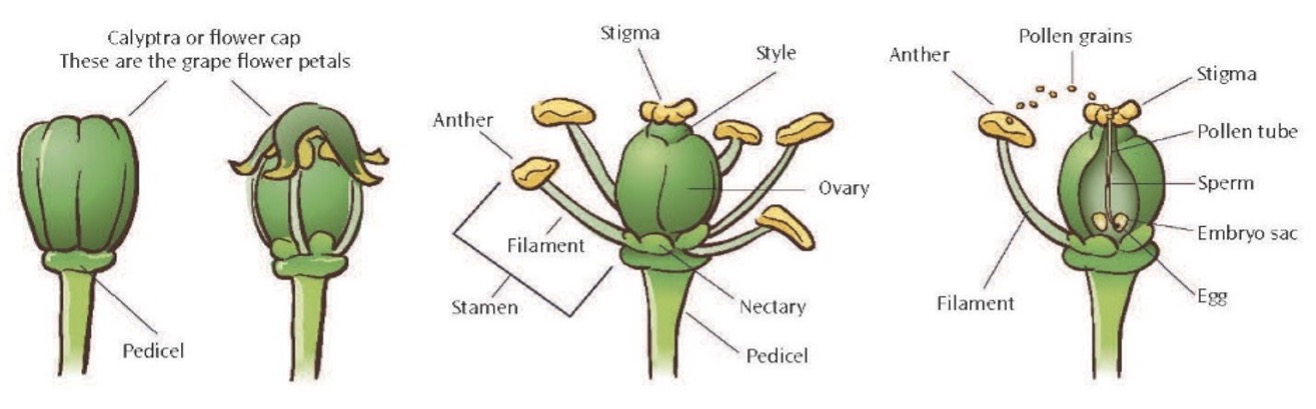
Bloom is the first visible step and involves the drying and separation of the flower cap (calyptera) allowing both the male (stamen) and female (pistil) flower parts to open and develop fully. Warm, sunnier weather is ideal. If conditions are too moist or cold during this phase, the cap can become stuck to the flower, eliminating the chance of fertilization and berry development. After the male and female organs are exposed and developed, pollination can begin