

Vintage Reflections
Winemaker Melissa Paris
Pruning
Winter 2024
Pruning isn’t just another seasonal milestone—it’s the foundation for the vintage. The decisions we’ve made over the past few months will shape the balance, health, and ultimately, the quality of our wines. And with warm weather on the horizon, we’re poised to see even more budbreak in the coming days.
Why We Prune (and Why It Matters)
Pruning isn’t just about cutting back the vines; it’s about giving them a consistent schedule and guiding them each vintage. We prune to create the right leaf-to-fruit ratio, keep yields in check, and make sure each vine has a clear path forward. Done right, it will save labor later in the year and it helps with airflow through the canopy, reducing disease risk and ensuring even ripening. It also sets the tone for future vintages—good pruning this year means fewer headaches next year.
Beyond vine health, there’s an artistry to pruning. Each vine is a little different—some naturally more vigorous, others a bit more reserved. The goal is to tailor our approach so that no vine is overproducing or underperforming. It’s about balance, not just in the vineyard, but in the wine.
Timing: The Chess Game of Pruning
The decision of when to prune is just as important as how. Over the past decade, we’ve shifted to later pruning, waiting until February and March. There’s solid reasoning behind this: later pruning lowers the risk of fungal infections like Eutypa and Esca, whose spores diminish over successive winter rains. It also has a direct effect on budbreak—pruning later can delay budbreak by up to 10 days, which can be a lifesaver in frost-prone areas. That said, timing depends on each vineyard’s microclimate. Coastal vineyards, where spring rain lingers, benefit from later pruning. Warmer, drier vineyards need an earlier approach to keep things on track. We make these calls vineyard by vineyard, block by block, because no two sites—or seasons—are exactly alike.
Cane vs. Spur Pruning: The Right Tool for the Job
There’s no one-size-fits-all approach to pruning.
- Cane Pruning (e.g., Guyot) is all about flexibility. There is no thicker permanent cane (cordon). We can adjust the number and length of canes each year, responding to how the vine performed the previous season. It’s great for balancing vigor, but spacing can be tricky—Mother Nature doesn’t always give us evenly spaced buds. The buds on cane pruned vines are typically spaced 3-6 inches apart with 5-9 buds on each cane.
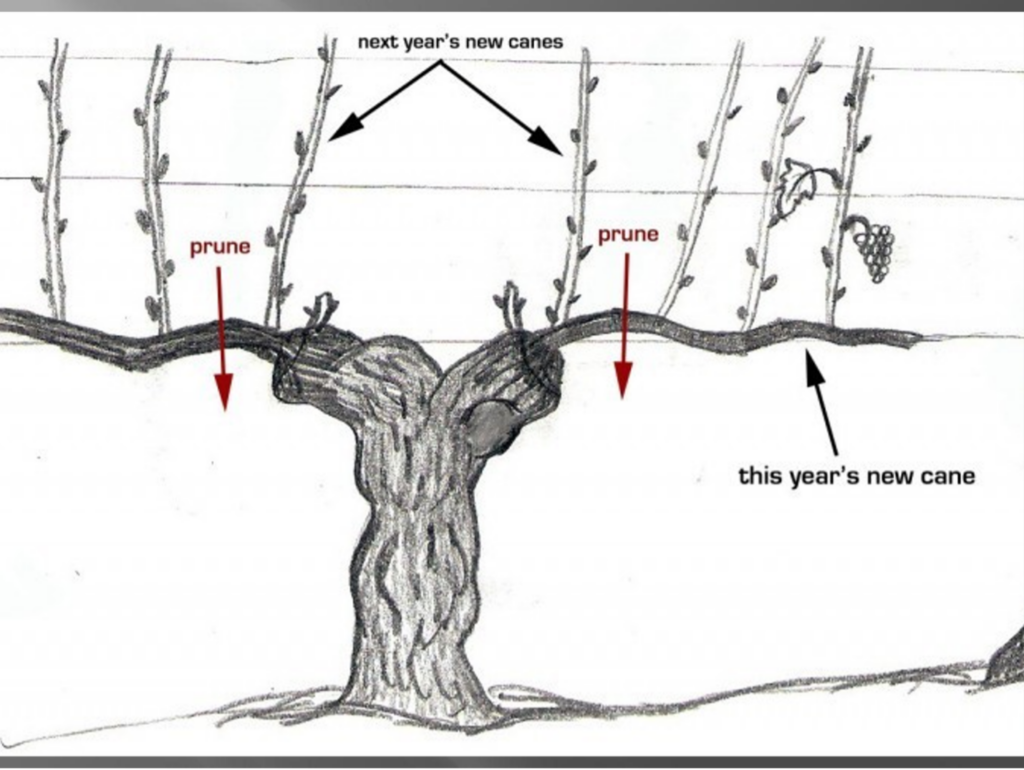
- Spur Pruning is more structured. There is a permanent thicker cane (cordon) with 6-8 spurs on each cordon that the canes grow out of each year. It keeps shoot distribution even and minimizes the “what ifs,” but once a vine is set up this way, there’s less room for annual adjustments.
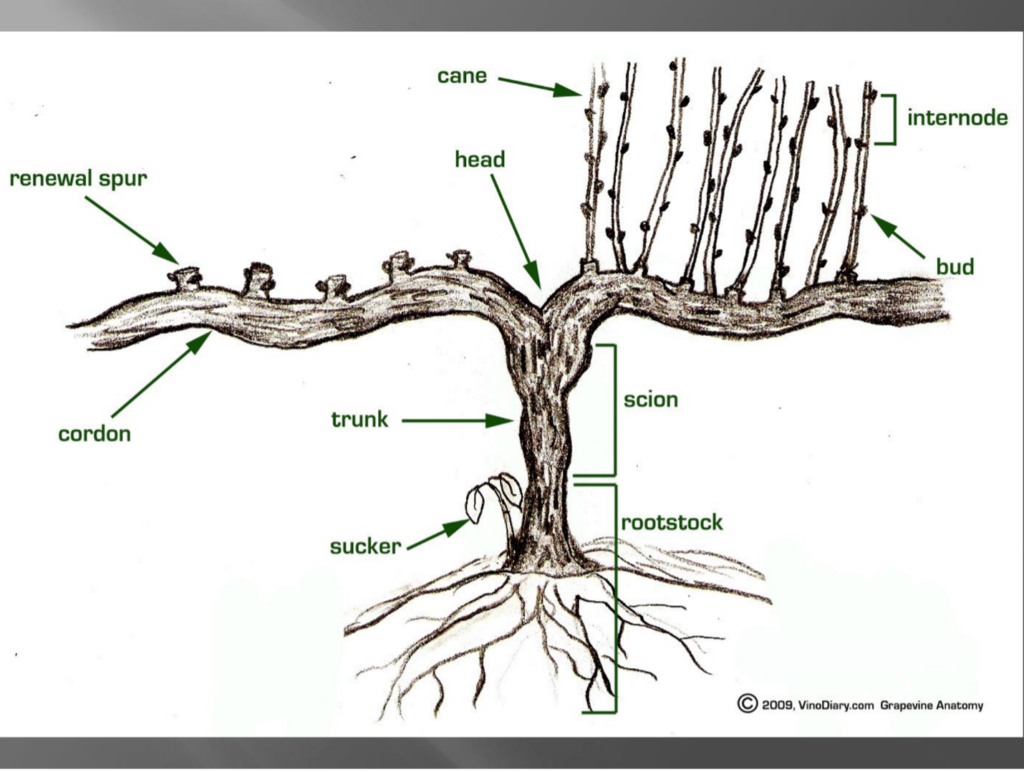
Each method has its place, and we apply them strategically depending on variety, vine age, and vineyard conditions. The goal is always the same: balanced vines that set up the fruit for success.