Winemaker’s Update: From Vineyard to Barrel, Part 2
Hello Everyone,
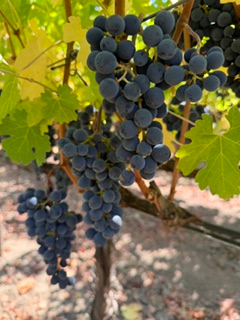
In a previous Winemaker’s Update, I shared a glimpse into my trip to France and the journey of French oak from the forests of Tronçais, through the stave mill, and ultimately into the hands of the coopers who craft the barrels we use in our cellar. Now, with harvest complete and all new wines aging in barrel at Alpha Omega, I wanted to take you a little deeper into how those decisions ultimately influence the wines I make.
One of the biggest takeaways from my time in France was a renewed appreciation for just how many decisions go into a single barrel long before wine ever touches it.
From Forest to Cooperage
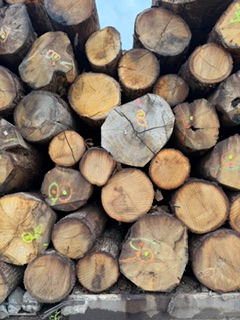
It begins in the forest. The origin of the oak, age of the tree, soil, climate, and growing conditions all influence the characteristics of the wood. Once harvested, the oak is split into staves and left outdoors to season — often for two to three years. During this time, exposure to rain, wind, and changing temperatures gradually softens the wood’s harsher tannins and allows it to develop the qualities I ultimately want in a finished barrel.
From there, grain selection becomes another important consideration. Tighter-grained oak generally provides a slower, more subtle extraction, while slightly more open grain can contribute its influence more quickly. Neither is inherently better; the goal is finding the right match for the wine.
Barrel construction itself is an incredible combination of precision and craftsmanship, particularly at smaller artisan cooperages such as Tonnellerie Boutes, where much of the process remains remarkably hands-on. Individual staves are carefully selected and assembled before being gradually shaped over heat and moisture in a process known as fire bending. As the wood warms, the cooper slowly draws the staves together to form the familiar shape of the barrel — without the use of glue or adhesives. Watching this process firsthand was a reminder that every barrel is truly a handcrafted vessel, and that the skill of the cooper begins influencing the oak long before the final toast is applied.
The Art of Toasting
Then comes one of my favorite parts of the process: toasting.
At the cooperage, barrels are shaped over an open flame, and the amount of heat, length of time, and technique used by the cooper dramatically influence how that barrel will interact with the wine. Toasting can contribute everything from subtle spice, cedar, and structure to notes of vanilla, mocha, caramel, and smoke.
For me, however, great oak should never be the first thing you notice in a wine.
Matching Barrels to Vineyards
At Alpha Omega, I am looking for barrels that support the personality of each vineyard rather than cover it up. A powerful mountain Cabernet — like our AVA Series Atlas Peak Cabernet — may benefit from a barrel that helps soften and integrate its natural tannin structure, while a more elegant valley-floor wine may call for something more restrained. Even within the same vineyard, different clones, blocks, and individual lots may be matched with different coopers and toast profiles.
This is especially important because barrel fermentation remains a significant part of our Bordeaux varietal program. Rather than simply transferring finished wine into barrel for aging, many of our wines actually complete fermentation inside the barrel. This creates a different relationship between the wine and the oak from the very beginning, helping integrate tannin and texture while building complexity.
That is why the AO barrel program is never a one-size-fits-all approach. Each year, I evaluate our coopers, forests, grain selections, toast profiles, and individual barrels against the vineyards and wines in front of us. Some combinations become trusted favorites, while others continue to evolve as the vineyards and our understanding of them evolve.
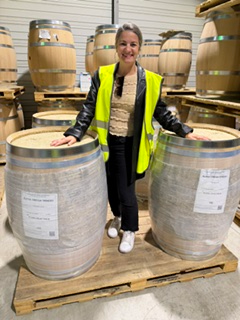
Tonnellerie Boutes Barrels wrapped and ready to ship from the Cooper in France to AO. In June, I wrote a note on the barrel head to surprise Hector, my Barrel Cooper, when he unwrapped them.
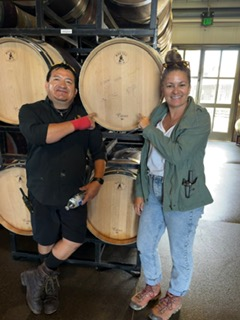
Same Tonnellerie Boutes barrels arrived in the beginning of August and ready for harvest at AO. Me and Hector smiling at the note/gesture.
The 2026 Vintage in Barrel
Standing in the Tronçais forest and then following that same oak through the stave mill and cooperage gave me an entirely new perspective on something I work with every day. A barrel may be one vessel in our cellar, but behind it are decades of forest growth, years of seasoning, generations of craftsmanship, and countless decisions before it ever arrives at Alpha Omega.
Now those barrels are all filled with the 2026 vintage and the aging portion of the wine’s life is underway.
With Harvest 2026 officially behind us, the decisions I’ve spent the last year preparing for have now come to life in the cellar. I’ve carefully matched individual vineyard lots with the barrels that will help shape their evolution over the next few years. As these young wines begin their journey through élevage, the focus shifts to nurturing their development while preserving the unique character of each vineyard and the vintage itself.
The vineyard will always give us the foundation. My job, alongside my winemaking team, is to protect that identity, build upon it, and know when to simply get out of the way.
Cheers to a successful Harvest 2026 and the exciting journey ahead!
Stay connected with the Alpha Omega cellar:
Visit the Estate: Reserve a tasting at Alpha Omega in Rutherford and see the cellar for yourself. Well-behaved, leashed dogs are always welcome on the grounds.
Visit the Collective: Alpha Omega Collective is at 1245 First Street in Downtown Napa. Walk-ins welcome — no reservation required.
Acquire the Wines: Browse our current vintage releases, crafted from the vineyard sources Melissa discusses in every update.
Join the Wine Club: Become part of the Alpha Omega family and receive curated seasonal selections, member pricing, and invitations to exclusive estate events.